Friday, 14 September 2012

Dicks and their Bones


So archaeologists have (probably) found the body of Richard III (http://www.bbc.co.uk/news/uk-england-leicestershire-19561018). At long last! This discovery is almost worthy of a holiday in my book (FYI: Richard III’s birthday is coming up – October 2 – and that is a holiday in my world). To honor this epic discovery, I thought I would provide a quick rundown of the fate of the bones of all three Royal Dicks.

Most of Richard I was buried in Fontevrault, an abbey in France. This is not surprising for two reasons 1) both his parents are buried there and 2) the man loved France and spent way more of his time there than he ever did in England. I said most of Richard is in Fontevrault because his heart was buried in Rouen Cathedral and his entrails in Châlus, where he died. Yes, being buried in more than one place was a definite thing in the middle ages (at least for aristocrats). The medieval Catholic church was actually not too keen on people being dismembered and buried in any number of places, but they couldn’t stop the rich and important from doing whatever they wanted. Personally, if I ever become a somebody (not likely) I want my bits and pieces scattered as many places as possible. Unfortunately for Richard and his ‘rents, Fontevrault did not make it through the French Revolution unscathed. Their bones are probably lost.


Richard II had carefully planned ahead to ensure the best possible setting for the eternal repose of his mortal remains. When his wife Anne of Bohemia died in 1394, Richard contracted with artists and builders to construct a beautiful double tomb (the first double tomb for royalty in England) in the shrine of Edward the Confessor in Westminster Abbey. Anne’s body was placed in the tomb and Richard waited to join her. He unfortunately went to his everlasting reward a bit earlier than he had intended; after his deposition in September 1399, he was starved to death by his cousin and successor Henry IV. After his death, Henry originally sent Richard’s body to the Dominican friary in Kings Langley. Richard remained there until 1413, when Henry V (son and successor of Henry IV) moved Richard’s body to Westminster Abbey as a sign of political healing. Ever since, Richard has rested beside his beloved Anne.

However, the couple’s rest has not always been … restful. The tomb’s decorations began to come unattached in the eighteenth and nineteenth centuries, revealing holes. Schoolboys at Westminster School (which meet on the abbey grounds) would stick their hands inside and fiddle with the bones. Sometimes, they even stole them. Richard’s jawbone was taken by a student in 1776; it was finally returned in 1906.* Rumor has it, the family passed the jawbone down through the generations and were using it as a paperweight before Westminster Abbey demanded it back. Anyway, when the tomb was opened in 1871, many of Richard and Anne’s bones were missing. Some, such as the jawbone, have been returned; others are gone forever. As creepy as it would be to have a bone for a paperweight, I would love to have a bone from either Richard II or Anne of Bohemia. It would be so sweet!

*Dates on the jawbone: http://rictornorton.co.uk/westmin.htm. 

From Westminster Abbey website


From Westminster Abbey website


Finally, Richard III. After his death at Bosworth, he was interred at the Franciscan church in Leicester. That church was destroyed after the Reformation; eventually the area became a parking lot. And now, Richard’s body has been found, underneath said parking lot. Huzzah!

There was no guarantee the archaeologists would find Richard’s body. Some stories said the king’s body was thrown into the River Soar when the church was destroyed. It would appear that was not true.

Memorial to Richard III in Leicester Cathedral


Bonus: Richard, earl of Cornwall

This Richard was the younger brother of Henry III. Richard was also elected King of the Romans (actually king of Germany), so he’s suitably royal. He was buried at Hailes Abbey, a Cistercian monastery he founded in Gloucestershire.  The church and tombs at Hailes have all been destroyed, although the ruins are a tourist attraction run by English Heritage (I’ve been – it’s great). Richard is buried somewhere near the altar, and unless someone has pilfered it (unlikely), his skeleton should still be there. When I visited Hailes, I walked over every inch of the ruins of the church, just so I could be sure I had been on the spot of Richard’s grave.

Ruins of Hailes Abbey (not the church)

Monday, 10 September 2012

Richard Parkes Bonington (1802-28)


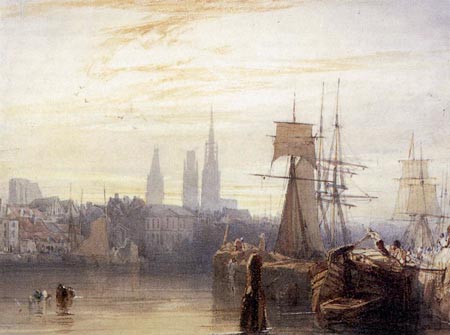
This Richard is a British landscape painter, who died tragically young of tuberculosis. Richard was born in 1802 in a village near Nottingham; for economic reasons, his family moved to Calais in 1817. Although Richard had some artistic instruction from his father, his earliest watercolors date from once he was in France and studying with an outside instructor. In 1818 the family relocated to Paris, and Richard joined a famous studio. He worked exclusively with watercolors until 1824 when he started to focus on oil paintings; in both mediums he focused on marine landscapes. In the mid-1820s, he journeyed throughout Europe, visiting England, Normandy, Venice, Florence, Pisa, Genoa, and Basel (among other places). During the last two years of his life, Richard expanded beyond marine landscapes and painted views of Venice and illustrations to works of medieval history or historical fiction (such as novels by Sir Walter Scott). According to his entry in the Oxford Dictionary of National Biography, the development of Richard’s “painting technique was breathtaking and experimental. By the summer of 1827 there was little but scale to distinguish visually between his work in oils and his work in watercolours.” (Pretty impressive, eh?)

Richard collapsed in June 1828, weakened by either sunstroke or exhaustion, and later fell ill with tuberculosis. His parents took him to London in August, but treatment failed and he died on 23 September 1828 (about a month before his twenty-sixth birthday). Richard had actually been quite famous in his day, so his passing was widely mourned.

According to the painter Eugene Delacroix, a close friend of Richard’s:

“To my mind, one can find in other modern artists qualities of strength and of precision in rendering that are superior to those in Bonington's pictures, but no one in this modern school, and perhaps even before, has possessed that lightness of touch which, especially in the watercolours, makes his work a type of diamond that flatters and ravishes the eye.”

Source:

Patrick Noon, “Bonington, Richard Parkes (1802–1828),” Oxford Dictionary of National Biography, Oxford University Press, 2004 [http://www.oxforddnb.com, accessed 10 Sept 2012]

And now for some images! Here are a few of Richard’s paintings.


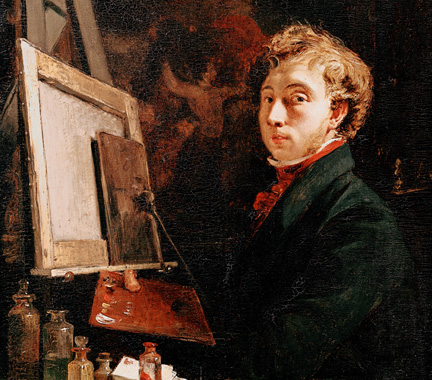
Self-Portrait

Monday, 3 September 2012

Richard Fitzalan, Earl of Arundel


School is back in session, so it’s time to feature a more academic Dick. To that end, I give you Richard Fitzalan, fourth earl of Arundel (and third earl of his family to have been named Richard), a medieval magnate who lived from 1346 to 1397.

Some of you might well be thinking, “That name. Those dates. I think I’ve heard of this guy before.” You would be correct! Richard, earl of Arundel was one of the wealthiest, most important magnates during the reign of Richard II, with whom Arundel did not get along at all. The two supported radically different policies; for instance, Richard II sought peace with France while Arundel objected, believing the terms of the peace were not favorable enough to England. Richard II also sought advice from younger, less high-ranking men, which irritated Arundel – he was the type of man (older, from an old noble family) that the king should have been consulting.  

Arundel became earl in 1376 at the death of his father (another Richard). The elder Richard and Edward III had gotten along quite well, and the elder earl had loaned the king a lot of money over the years. The younger Richard provided the crown with a substantial loan in early 1377 (before Edward III’s death), but from then on, he didn’t really lend any money to the king. That was surely a sore spot with Richard II – while his grandfather had been able to count on the Fitzalans for money, Richard II could not. It rankled him.

But the two men were already off to a bad start when Richard II was just a young’un. In the 1384 Parliament, Arundel gave an impassioned speech in which he claimed England was in a state of decay and desperately needed to be rescued from “the stormy whirlpool in which it is engulfed.”* The king was present for this outburst, and naturally, Richard II did not take too kindly to this. According to the Westminster Chronicle, he retorted, if “it is supposed to be my fault there is misgovernment in the kingdom, you lie in your teeth. You can go to the Devil!”* An eerie silence followed (everyone was probably thinking “oh shit”) until one of Richard’s uncles stepped up, cleared the air, and made everything better.

* Westminster Chronicle 1381-1394, edited by L.C. Hector and B.F. Harvey (Oxford: Clarendon Press, 1982), 69. 

Sorry, but I love this meme. And it actually works fairly well for Richard and Richard.


But things weren’t better for long. From late 1386 to 1389, a group of five magnates (called the Appellants (because they “appealed” Richard’s friends for treason) essentially took over the government. The Appellants were: Thomas of Woodstock, duke of Gloucester (and Richard’s uncle); Richard Fitzalan, earl of Arundel; Thomas de Beauchamp, earl of Warwick; Henry Bolingbroke, earl of Derby (later Henry IV); and Thomas Mowbray, earl of Nottingham. Arundel, however, was one of the ringleaders (Bolingbroke and Mowbray were less involved and are often termed the ‘junior Appellants”). These men took away Richard’s power, nearly deposed him, and executed or sentenced to death (in absentia) several of Richard’s friends. These friends included Richard’s best friend Robert de Vere (who was spared execution so long as he never returned to England), and the king’s old tutor Sir Simon Burley. Richard’s wife, Anne of Bohemia, begged on her knees for Arundel to spare Burley’s life, but it was to no avail. Burley was beheaded, and Richard never forgot (and certainly never forgave) what Arundel had done.

The two Dicks, however, managed not to have a major blow-up until the funeral of Anne of Bohemia (I wrote about this on August 3). In short, Arundel arrived late, asked to leave early, and Richard hauled off and smacked him. The king drew blood, and the funeral service was delayed while Westminster Abbey was cleaned and reconsecrated. Arundel then had to spend a week in prison in the Tower of London and was only released after paying a huge bail.

But it wasn’t until 1397 that Richard II really struck back. In July of that year, Richard arrested three of the Appellants (Gloucester, Arundel, and Warwick). Gloucester was shipped over to Calais (an English possession at the time) and secretly murdered; Arundel and Warwick were charged with treason. Warwick admitted guilt and received a sentence of life imprisonment, but Arundel denied the charges. He was accordingly tried and convicted in Parliament in September 1397. Although sentenced to have been drawn, hanged, and quartered, Arundel (thanks to his nobility) was beheaded on Tower Hill – on the very same day he was declared guilty (they didn’t waste time back in the day). Shortly after Arundel’s execution, there were rumors of miracles happening at his tomb. Richard II had the body exhumed and reburied elsewhere in an unmarked grave.

Although Richard II had taken down Arundel (and disinherited the man’s family) in 1397, Arundel ultimately had the last laugh. When Richard was deposed in 1399, Arundel’s son and heir was restored to the family’s wealth and titles. Since Arundel was so often at odds with Richard II, the earl’s reputation improved with the king’s deposition (in a sort of “the-enemy-of-my-enemy-is-my-friend” fashion).    

For more on Richard, earl of Arundel, check out:

C. Given-Wilson, ‘Fitzalan, Richard (III), fourth earl of Arundel and ninth earl of Surrey (1346–1397)’, Oxford Dictionary of National Biography, Oxford University Press, 2004; online edn, Jan 2008

Chris Given-Wilson, “The Earl of Arundel, the War with France, and the Anger of King Richard II,” in R.F. Yeager and Toshiyuki Takamiya, eds, The Medieval Python: The Purposive and Provocative Work of Terry Jones (New York: Palgrave Macmillan, 2012), 27-38.

Wednesday, 29 August 2012

People Sullying the Good Name of Richard


Sadly, there are some real dicks out there who are named Richard. Tragic (and poetically just) but true. Here are a couple of these douchebags.

Rich Ricci: one of the main bankers involved in the LIBOR scandal. I’m no economist, but the scandal had something to do with banks in London artificially manipulating the interest they charged other banks. In a nutshell, it was shady dealing.

I could find surprisingly little about Mr. Ricci online (not that I looked super hard), so I’m not 100 percent sure his name is Richard. But it probably is: Rich is a pretty common nickname for Richard. What I do know about Ricci just amounts to a resume; he started working at Barclay’s in 1994 and resumed his current position (screwing us all over) in June 2012. Do you think his parents knew he was destined to be a financier when they named him?

Side note: a man named Richard Ricci was a person of interest in the Elizabeth Smart kidnapping. Ricci refused to confess (since he didn’t do it) and died in jail (other charges) from a brain hemorrhage a few weeks later. Poor guy. If he were alive, I bet he would be mad that Mr. LIBOR up there is tainting his name.

Dick Masterson: a true piece of work. He is a hard-core chauvinist and runs the website menarebetterthanwomen.com. I saw a clip of this guy on the Dr. Phil show and he spouted such gems as “men created everything” (no word on how babies are made without women’s contributions), “if you see a woman in a nice car it means she’s owned,” and “all women are basically prostitutes.” Naturally, I am offended by what this guy says, but a part of me thinks (and hopes) he’s just pretending. That he’s saying all of these crazy things for attention, a la Lady Gaga and her weird fashion. It’s still completely offensive (and dangerous because it gives added to fuel to other woman-haters), but I really hope Masterson doesn’t actually believe this crap.

It also turns out that (thankfully) Dick isn’t his real name. According to the remnants of Masterson’s deleted Wikipedia page (yes, he was deleted from Wikipedia!), his real name is Dax Herrera. Seriously – Dax?! I’m just thankfully he isn’t truly a Richard, but I’m annoyed he’s taking the name and using it for evil. Of course, maybe he’s calling himself Dick as a signal to us all that he is truly being a dick and is just faking his virulent misogyny.

Anyway, these guys make me sad. They are ruining a perfectly good name. Alas.

Tuesday, 21 August 2012

Dick Van Dyke


I am prompt with this one! I just noticed that “Dick Van Dyke” was trending, and I consider it my sworn duty to swoop in and get the skinny on all trending Dicks. It’s a tough job, but someone has to do it. Dick Van Dyke is trending because it was announced that he will receive a Screen Actors Guild Lifetime Achievement Award in January 2013. The man has been acting and entertaining for over sixty years. Way to go, Dick!

Richard Wayne Van Dyke was born December 13, 1925 in Missouri, but he grew up in Illinois (go Midwest!). He served as a radio announcer and entertainer of the troops during World War II, and he married his first wife (and mother of his four children) on the radio show Bride and Groom in 1948. I must admit, that sounds like a radio precursor to reality TV.

After radio, Dick was part of a touring comedy duo until he started appearing in Broadway musicals. His first role was in The Girls Against the Boys (never heard of it, but maybe you have) and he later played the male lead in Bye Bye Birdie. Dick also did television; his most famous work was The Dick Van Dyke Show with Mary Tyler Moore, which ran from 1961 to 1966. Dick did other shows after that (including The New Dick Van Dyke Show) but none were as successful. Fun facts: he voiced his animated counterpart in “Scooby-Doo Meets Dick Van Dyke” (speaking of Scooby-Doo: Rest in Peace, Phyllis Diller); played a murderer in the first episode of Matlock; and was a boyfriend of Bea Arthur’s character on The Golden Girls. Good stuff, right there.

Dick also did film; he’s probably most famous for portraying the chimney sweep Bert with the horrendous accent in Mary Poppins. His accent, according to a 2003 poll by Empire Magazine, is the second-worst in film history. That’s pretty bad, but, when you’re a kid, you don’t really notice. It’s not as though I had ever heard a turn-of-the-century London East Ender talk before.  But Dick seems to take it all in stride, noting with a laugh, that British people “tease me to death” about the accent (see LA Times article). Yeah, I’d be laughing too – all the way to the bank – if I were as rich as him. Dick also appeared in Chitty Chitty Bang Bang (without a horrible accent). He also played a villain in Dick Tracy and Night at the Museum. He was in other movies, too, but those weren’t very good.

Dick has won five Emmys, a Tony, and a Grammy, which is quite a haul. He has a star on the Hollywood Walk of Fame, and he’s about to get a SAG Award. Congratulations, Dick!


Sunday, 19 August 2012

Tuesday, 14 August 2012

Richard Burton


This time, I’m talking about Richard Burton the actor, who is possibly most famous for being married twice to Elizabeth Taylor. Just like the explorer Richard Burton, this Richard also had a crazy life and was a bit of a douche bag.

Richard Burton was actually born Richard Walter Jenkins in November 1925 in a small village in Wales. He was the twelfth of thirteenth children! When his mother died two years after Richard’s birth (giving birth to baby number 13), Richard went to live with an older sister. Young Richard was a good student and a great athlete and he became quite close to his schoolmaster Philip Burton. But Richard left school at age 16 and went looking for work. When he joined the Air Training Corps, his old teacher Philip Burton was the commander. Because Richard was smart, Philip adopted him so that Richard could return to school. It was because of this adoption that Richard eventually changed his last name to Burton. Richard, however, remained close to his natal siblings.

Much of Richard’s acting was done on the stage. He did a lot of Shakespeare plays, which is awesome. He was Prince Hal in Henry IV, Part I, Hamlet in Hamlet, and Coriolanus in Coriolanus. Furthermore, he was the original King Arthur in the Broadway show Camelot (which, incidentally, lasted almost five hours!).

Burton was also in many movies, some of them awesome, some of them just for the money. His better films include the fabled Cleopatra, wherein he met Elizabeth Taylor, Becket (my personal favorite, in which Richard plays the titular archbishop opposite Peter O’Toole as Henry II), and The Night of the Iguana, based on the Tennessee Williams’ play. Burton also rocked out, opposite Elizabeth Taylor, in Who’s Afraid of Virginia Woolf? Sadly, their marriage had become a bit like that of the couple in the movie (aka: not good), and they divorced in 1974. The two remarried from 1975-1976, but they called it quits for good after that.

Burton died in 1984 at age 58, which seems rather young. But when you take into account his hard-living, it’s a wonder he lasted that long. Burton began smoking at age 8 and admitted in 1977 that he smoked 60 to 100 cigarettes per day. Per day! His younger brother, in a biography of Richard that appeared after Richard’s death, stated that Burton smoked at least 100 cigarettes a day. How is that even possible! Richard Burton also drank like the proverbial fish. At one point, he drank three bottles of vodka a day. Seriously? Burton makes Don Draper’s actions look moderate. And speaking of Don Draper, Burton was also a big fan of sex with the ladies (and possibly, to a lesser extent, of sex with men. He claimed in 1975 that he had “tried” homosexuality). Anyway, point being, the dude seemingly flirted with all of his female co-stars and bedded any woman he could. No wonder he was divorced four times (twice from Taylor, and then once each from two other wives)!

Richard was also a bit of a douche when it came to women. Aside from copiously cheating on his wives, he apparently said, about his wife Elizabeth Taylor, that calling her “the most beautiful woman in the world is absolute nonsense. She has wonderful eyes, but she has a double chin and an overdeveloped chest, and she’s rather short in the leg.” Who says that? Especially about his wife?

Burton was nominated for Oscars seven times, but he never won. Unlike many famous, talented British actors, he also never received a knighthood. Some speculate this is because Richard lived in Switzerland as a “tax exile” in order to avoid paying high UK taxes. [Please note, my fellow Americans, that we cannot use this little trick. Uncle Sam expects you to pay federal income taxes no matter where you live and no matter where you earned the income. The only way out is to renounce your US citizenship, which generally cannot be done if the government determines you are only doing it to avoid paying taxes.] But hey, Richard was married to Elizabeth Taylor, one of the most beautiful women ever (despite what Burton said), so maybe things worked out in the end?